As a preamble, in case a buddying CG character TD was reading this article, please pay special attention the specific “Mouth shapes” term I am using here.
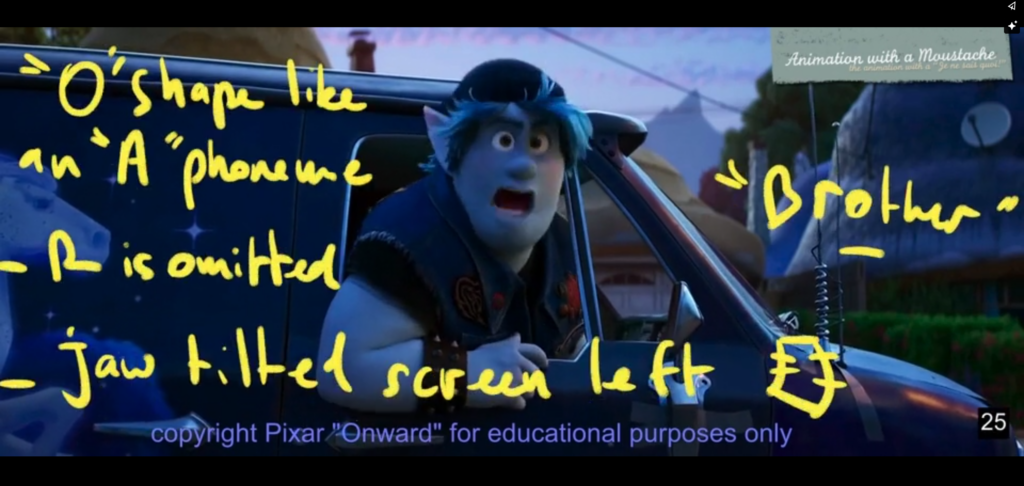
A Mouth shape IS NOT a blend shape. Blend shapes are single predefined shapes that can only go from 0 to 1 and as a result, it is impossible for the animators to make successful transitions between phonemes or make the lip sync look organic.
“Mouth shapes” are instead built by the animators by moving/rotating individual controls like the mouth corners, the lips, the lip rolls, the mouth Up Down, the “sneer muscle” control (Levator Labii Superioris) and their secondary and tertiary counterparts. (see Malcolm rig v2 demo for reference https://youtu.be/h3YKuj6qjAM?t=3325)
Now that we have cleared this up, let’s get back to the specific topic.
As I what I was watching the “behind the scenes” section of Aardman’s “Early Man” Bluray last week, I was particularly interested by a section showing the 12 mouth shapes used for lip sync at the Bristol studio.
Once I have a bit more time, I will share on this blog a little presentation I made at work for the animation team. In the meantime, let’s use my recent findings as an opportunity to talk about mouth-shapes in general.
Here are some screenshots taken from the Bluray followed by a recap.
As CG animators, the first difference we can find is the lack of sad and happy shapes. Instead, Aardman animator seem to only require neutral shapes.
An other interesting thing is the lack of the UW shape, the lips are missing for the O shape so I could guess this is what the OH shape is or possibly what the RR shape is for?
The shapes look a lot like the ones used in CG except that in CG, it would be very easy to move the corners in and out to adapt the Submissive shapes (MBP / SDTK / L and FV) to the following or preceding Primary shape (O / U / E) in order to smooth out the transitions.
Stop motion features being, mostly, shot on twos, animators can probably get away with it as this is the charm of the medium. Having no control over the corners in CG would make the result very poppy and undesirable for most productions.
Just for comparison, I am reposting the Sony’s “Chester V”‘s mouthshapes and the Blair chart I featured a while back. (a link to the original article is posted below)
For “Cloudy with a chance of Meatballs 2”, Chester V had a lipsynch library of 16 shapes.
M / M2 / S / E / EH I / L / A / AH / AO / OU / O / Th / U / U2 FV
Personally, my library is closer to the Preston Blair chart as most shapes can easily be reconstructed from the following basic 10 shapes and a smaller library is easier to use and mamage.
A / E / O / U / NDTCDKNRSZ / W / MBP / L / FV / Th
I once came across a complex Kung Fu Panda lip sync library that would be useful for this article, let me know if you have a link somewhere.
Animation Collaborative or AnimC for short is the brick and mortar animation school situated right opposite Pixar in Emeryville.
Having personally witnessed the awesomeness of the school in the past, I mentioned the school few times already on this blog and what some of you might not be aware of, is that Pixar’s Directing Animator Michal Makarewicz and the AnimC crew, post a series of insightful tips on the AnimC facebook page which you might want to check out:
Having been out of animation school for quite a while now, I tend to forget or might not be aware about the latest tips and tricks of the industry so it is great to be able to stay in the loop from the comfort of social medias.
Here is one of the latest tips AnimC posted and that people might not be aware of:
“Unless the character is deliberately talking to the camera, don’t break this rule! It can be distracting for the viewer”
This is a follow up to my previous post and once again, I don’t have access to the Disney Feature animation tools so those findings and screen captures are only from various popular behind the scenes videos, some of them are posted below. This said…. I never ever managed to see any pickers from BlueSky studios!
Olaf body and facial picker
Disney animation fans and especially animators, are very familiar with dAnimPicker, the Disney animation picker, a good looking and very functional picker with some really cool features (zoom and pan), similar to the AnimSchool picker and the good old abxPicker.
Kristof Picker (Frozen)
The dAnimPicker has some great additional features like the pickwalk, to easily navigate from control to control, and anchors, to quickly jump to predefined position like the face picker, or body picker.
Kristof and Anna facial and body pickers
You can see the interaction between the animator and the picker, 9:03 into the following video:
Having never seen that sort of picker in past researches, I was really surprised when I came across two similar looking pickers: Locus and Character Toolkit Designer.
After bumping on Locus through Pinterest with a totally unrelated research, I was finally able to track a video demo of the apparently commercially available picker from Korean based Locus Animation studios. (there are more demos on the Vimeo channel).
The similarity with dAnimPicker is pretty striking but wait until you see Character Toolkit designer!
The resemblance is stricking right?
I am not sure if ILM TD Davoud Ashrafi, the creator of the tool, is the actual creator of the Disney picker or if he just got inspired by it as he keeps mentioning, but the demo on his Vimeo channel is fascinating. The creation part of the tool very exciting compared to other tools and I especially love the mirroring feature, this would have saved me a lot of time.
Let’s finish up this post with more related Disney behind the scenes videos and don’t skip the Wreck it Ralph videos where you can also see the body controls visible in the Maya viewport. Pickers are good when the screen is too cluttered but on-screen controls are preferable.
In 3:02 of the following video, you will see the eyelashes controls. Crazy right! I already mentioned that the animators shape the eye lids at Disney in a previous article.
Disclaimer: Much to my regret, I don’t work for Disney Feature Animation but DTVA (Disney TV) so I don’t have access to any of the tools demonstrated here and as such I am not breaching any NDA. The content is just extracted from publicly available material.
If you are interested in dAnimPicker, the Disney character picker, and if you want to know how the brows are controlled at Disney, here is a short clip I extracted from a Moana Behind the Scene video.
I think I am recognizing Disney head of animation Malcon Pierce here, and if you pay attention, you will probably notice that he is shaping the brows using only a main control, 3 secondary controls and probably navigating between them using his keyboard using a pickwalking feature.
The light blue control is the main brow and the darker ones are the secondary (inner and mid brow). The dark circular just above is probably the outer brow.
I don’t know where I got this from but here are some notes I had buried in my hard drive. I am guessing this is an answer to a Q&A with Disney animators who worked on Tangled.
Having attended Animsquad, I am aware about the importance of eyelashes and I had been told a while back that eyelashes could be animated on a show like Tangled.
Without further ado, here are the notes :
As far as eyes are concerned, for Tangled, We Payed HUGE attention to eye lids. every frame was tuned to Glen’s drawings for the max appeal. Another HUGE things we really spent time on were the eye lashes, Mainly Rapunzel and Mother Gothel. Glen stressed the importance of the lid shape, the tension in the lower lids, the shape of the lower lids, and where the eye lashes were pointing. In Alot of cases we would point the lashes where the character was looking, to help guide the viewer’s eye and boost the appeal of the character. I think the eye lashes and lid shapes are something really overlooked alot of the time, But these are HUGE tools that can be used to gain appeal and to show what the character is feeling.
Also some people think its the rigging. The rigs for these characters were very simple when it came to mouth and eye shapes. For the eye lids we only had three controls for the edge of the top and bottom lids, two corner controls, and open and close rotation controls. sometimes Less is more with controls, It makes it harder to get lost in the rig.
Hope that helps!!! On behalf of the crew, Thanks for the great comments!
I don’t think I ever posted that old video where Supervising Animator Scott Clark, takes us behind the scenes and quickly features Pixar’s animation software, Presto, and Sulley’s dance shot from Monsters University.
I love the little aparté on Motion Capture and I can only agree:
“It isn’t realism that we are trying to get in animation, I would just be a Mocap artist (otherwise), I wouldn’t be an animator.”
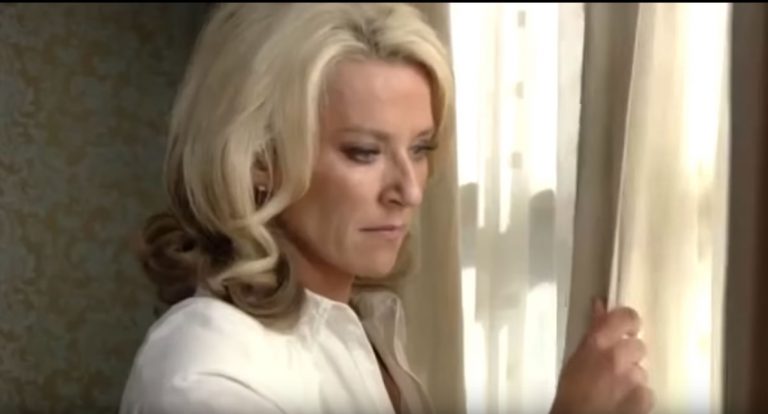
Great example of live action “slow burn” from British TV show “Eastenders.
The context of that sequence: “Vanessa’s fiancé was cheating on her with his ex-wife (soap opera’s for you 😉 ). He booked a betsit for them to have their affair but she (Vanessa) found out, went to the bedsit and found a note on the table saying ‘bubblys in the fridge’ basically telling the woman he was cheating with, that there was champagne in the fridge for her to help herself to.”
I was lucky to have Albert Lozano as character design teacher while attending Animation Collaborative in 2011 but my drawing abilities didn’t allow me to make the most of that great opportunity.
Albert rarely appears on social medias so it was great to find this little video insight into Albert’s thought process when designing characters, starting from simple shapes based on the personality of the characters.
Few month ago I was joining Dwarf animation in sunny Montpellier to work on the Monsters Inc TV series and today, Disney finally announced “Monsters at work, the TV series based on the Monsters inc universe.
The project is looking stunning and obviously I can’t say more than what was made public so if you are eager to know more about it, head off to the Pixar Pod where T.J. and Julie did a brilliant detective work! 😉
Ideally, you want to download the video and play it frame by frame with a media player like KMPlayer, Keyframe MP or RV for the lucky ones.
It is also possible to play the videos frame by frame in Youtube and Vimeo after pausing the video. Use Shift + Left or Right arrow in Vimeo, coma (,) or dot (.) in Youtube.