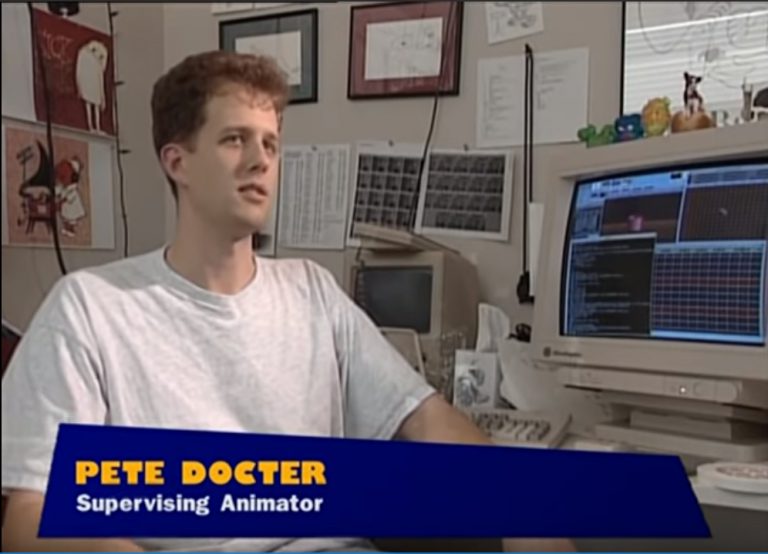
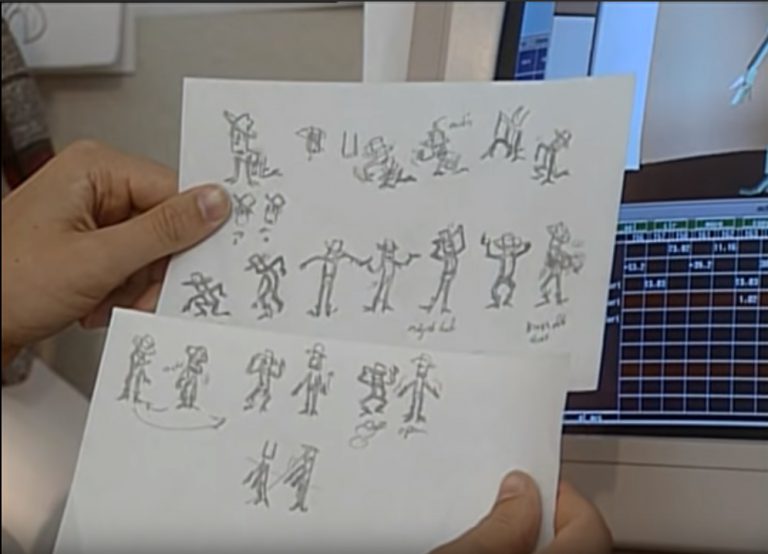
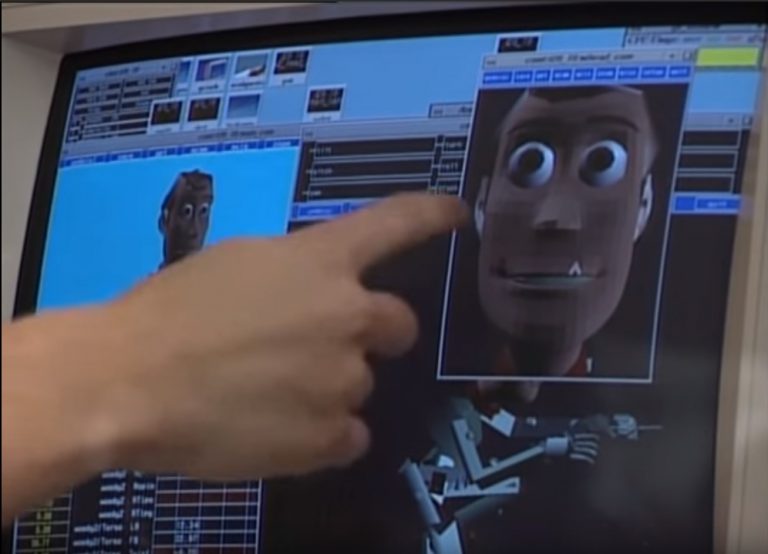
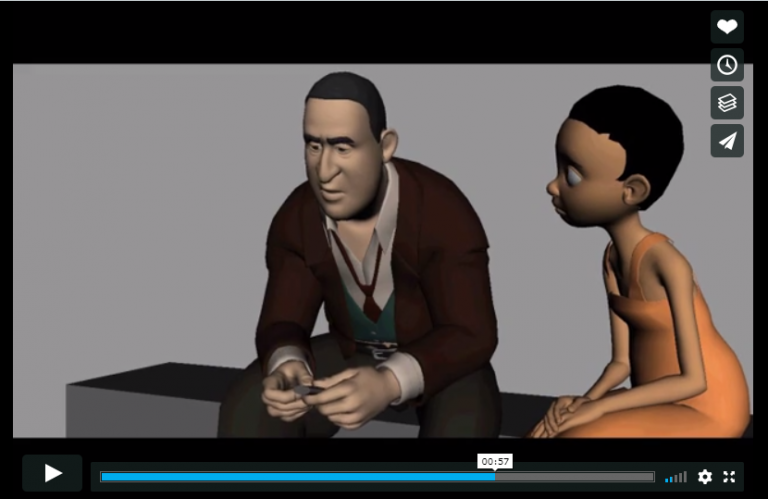
I have just found a very old Pixar presentation where Pete Docter demonstrates an antique version of Pixar’s animation software Menv (Presto) running on Silicon Graphics.
The concept hasn’t changed much but the software allows much more finessing nowadays.
Have a look and compare to the latest iteration of the software featured in Part I and Part II below.
I just found one of those rare Joe Moshier interviews. It is in French but Google Translate should do the job.
Joe Moshier is one of the greatest character designer but similarly to Paul Felix, his life is pretty secretive. If it wasn’t for his credits on some of the most visually interesting Disney movies like “Emperor’s new groove” or “Home on the range”, you wouldn’t know about him.
Joe joined Dreamworks few years ago to work on several projects. Here is the French article followed by a quick video interview. Sorry the new version of WordPress breaks the layout of my blog 🙁
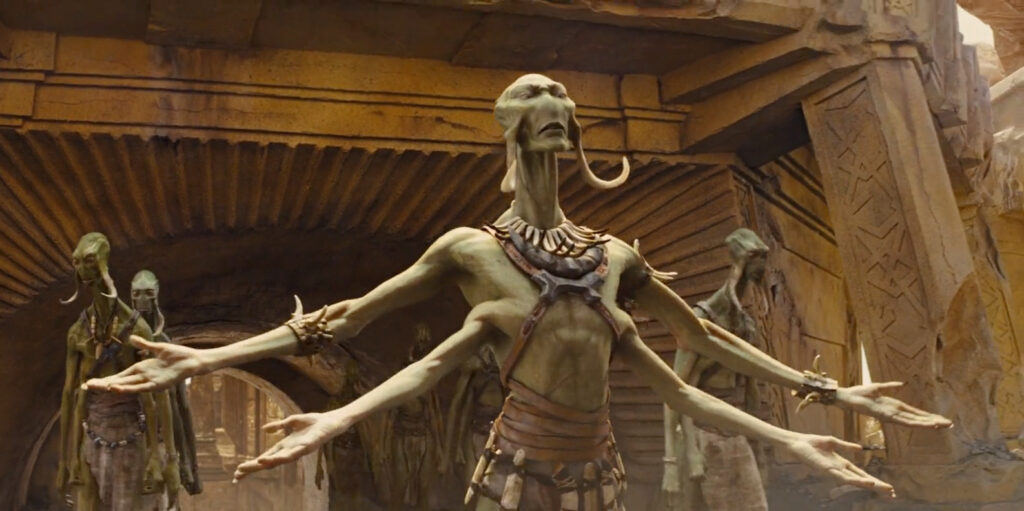
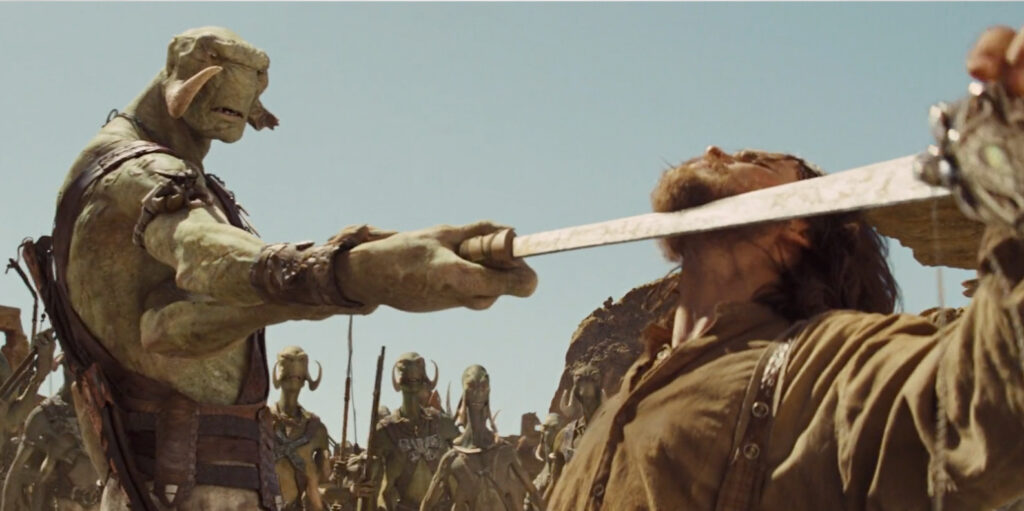
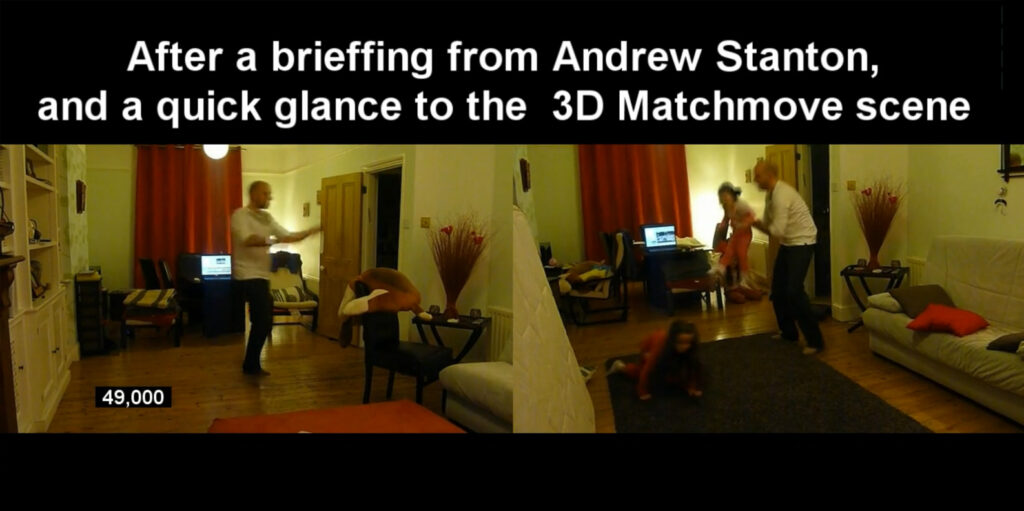
Many red moons ago, Disney partnered with Double Negative to bring to the screen Edgar Rice Burroughs’s novel “John Carter of Mars” and more specifically the character animation of the Tharks under the helm of Pixar brain trustee/ “Finding Nemo’s” director Andrew Stanton.
Here are few behind the scenes videos and a great animation process walkthrough by Patrick Giusiano followed by a series of related articles.
Behind the scenes are very rare those days compared to 10 years ago where you could get 10 hours of extra features on the additional DVDs so let’s celebrate the ones available.
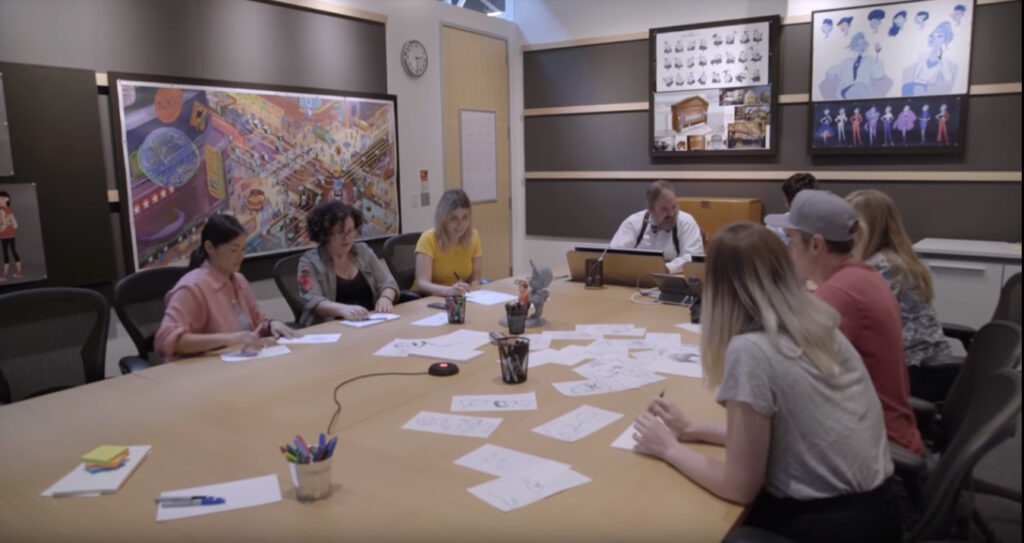
As an animator and hopeful storyboard artist, I am mostly interested in the nitty gritty of animation related stuff and storyboarding and this video happens to have a bit of both.
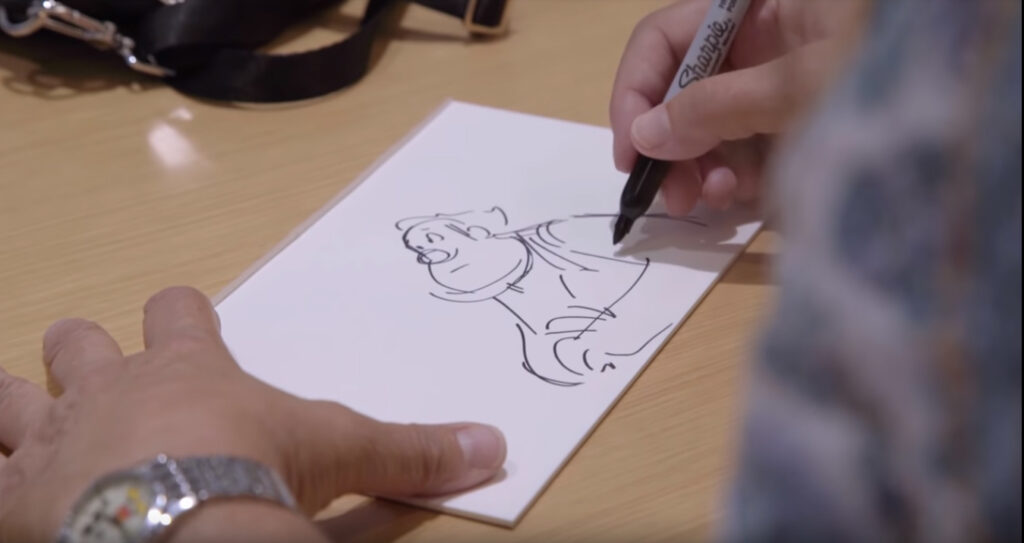
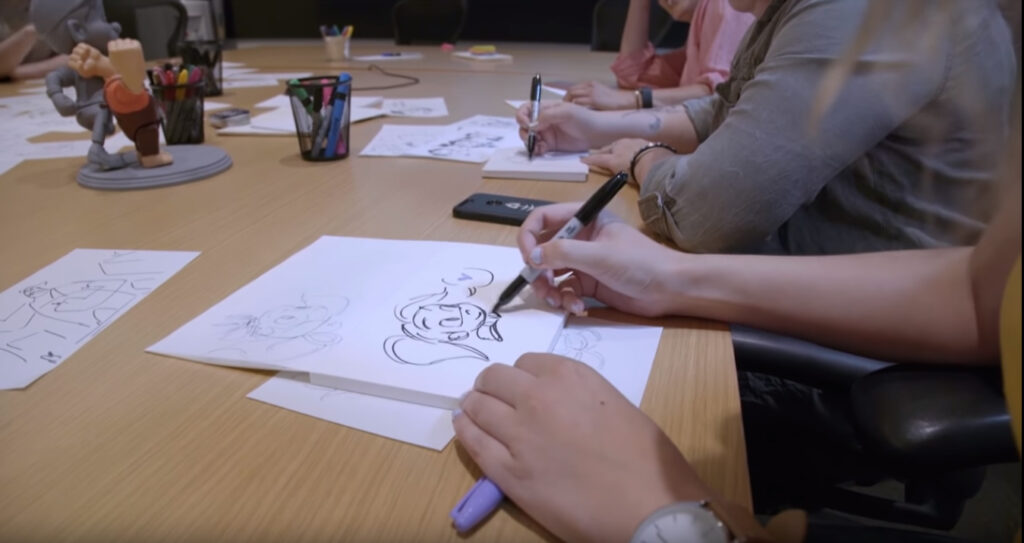
I find it interesting to see storyboard artist (mostly female yay) working together in a room, with Sharpies on paper, but this makes sense as it probably is a brainstorming session to work on a specific scene. I wonder if they will scan the drawings next or just redraw them on the computer, probably the latter.
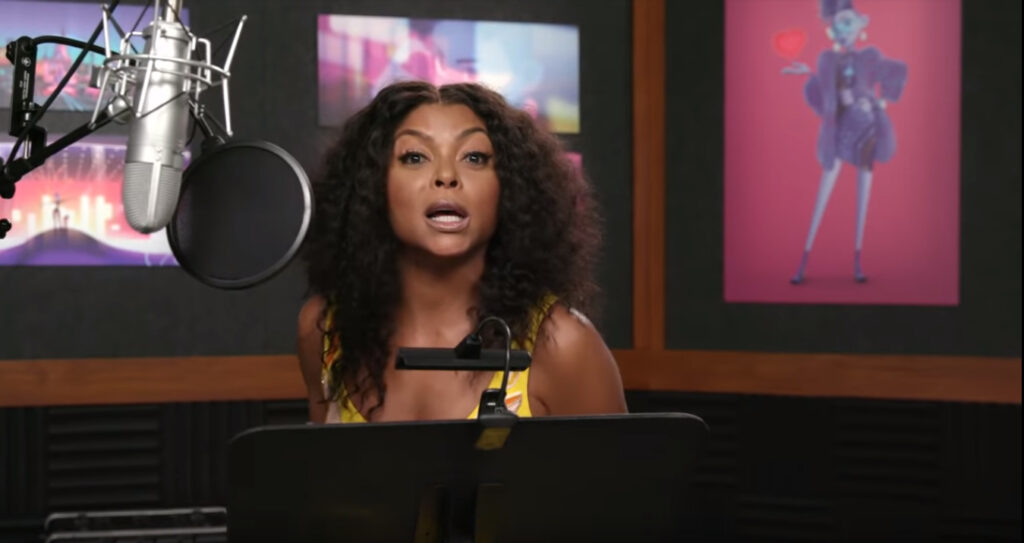
Animation wise, except few seconds with fellow Animation Mentor graduate Kira Lehtomaki, there isn’t much to see however, I am still finding some material worth a look. In feature animation it is not rare for animators to use footage from actors reading their dialogue for their acting so I can’t wait to see how much the animators derived from it as the hand gestures here in the video are mostly contrived, symmetrical and unappealing due to the fact the actor are just focusing on their lines.
I don’t understand how people can animate heads in local (parent) space. Here is a great example on why you want to animate the head in world space rather than local space.
Our vestibular system acts as a gyroscope allowing us to keep our head’s direction independent from the rest of the body.
Using local space for the head also requires so much counter animation work, hindering granular refinement of the motion.
The motion of the body is so complex and requires a lot of finessing when the head seems so still. In production you want to have the freedom to add more layers of complexity in the body without having to counter animate the head.
“Asterix and the Mansions of Gods” by French directors Alexandre Astier and Louis Clichy has become my bedside table movie this month, trying to adapt to cartoony animation and as I was analysing a sequence, I just realised something.
Slow motion shots are fun aren’t they but we have to recognize that they do stand out a little bit too much those days and might come across as lazy editing especially in animated feature so how one can avoid them?
First we should have a look at the way the action has been cut in this sequence to highlight the amount of frames being borrowed from shot to shot. Usually we accept that it takes between 3 to 5 frames for the eyes to adapt to a cut and therefore borrow that amount of frames from the preceding shot to make the action look seamless over the cut. Here are the start and end frame of each shot just so we can see the amount of overlap.
This established, have a look how they cleverly edited the sequence. Instead of using the overused and boring slow motion, they used several cuts on the same action, borrowing just enough frames from the preceding shots to give more dimension to the sequence! Very very clever.
That’s it for today, I hope you enjoyed this post.
I never bothered making a showreel with my VFX work as I haven’t done anything really substantial during my time at Double Negative London but I worked out this could be educational for anyone wanting to join that industry.
In the next few weeks I will be looking back at some of the VFX shots I animated on or contributed to and offer a glimpse at what really goes on at one of the top VFX studios like DNeg.
I have no idea how it will work out in here but we will give it a go as I am not too sure how public I could make those posts. Enjoy while it lasts 😉
Today we are starting with my first shot on a VFX feature with 2016 Ron Howard’s Inferno.
This is a sequence where Robert Langdon (Tom Hanks) and Sienna Brooks (Felicity Jones) are pursued by a villain in the attic of the Palazzo Vecchio. Brooks and Langdon will escape their ordeal, not the villain.
For that shot I was tasked to animate some planks of wood and debris falling from the ceiling. The planks had to match the start frame of some polystyrene planks present during the stunt and their final posing would need to hookup with the bird’s eye view 24 seconds into the video.
Without further ado, here is the sequence:
That shot was pretty nerve wracking for several reasons:
1. This wasn’t my first shot at Double Negative but that was my first shot in the Feature department.
2. I was the only animator with pretty much no lead or animation supervisor above me and responded directly to the VFX supervisor.
3. The stunt-woman originally only fell from 10 meters when the height of the ceiling and the speed of the camera pan went through several iterations.
5. Ultimately, go on Youtube and look for references of planks falling from the ceiling or anything close to that. Good luck 😉
Being pretty technical (at least at that time), I quickly worked out that I should try to run several simulations with nDynamics in order to get some good references and possibly reuse the result for my final animation. This was a really good move as my CG supervisor only appeared after 3 days and I could see he was glad he caught me doing some R&D rather than checking cats videos on Youtube or checking the stock market. Interestingly enough the later is a cause for dismissal according to the contract but not the former.
I eventually constrained and baked the planks and debris to the simulation, but this was only for starting the animation as eventually the camera motion got totally cheated and I had to hand key the whole thing frame by frame because of nasty gimbal locks and to better relate the speed of the planks to the speed of the live action . The final version wasn’t my favorite one as the planks lack some residual energy but it looked the less jarring as I had some really funky ones with some plank of wood doing some fun business on their landing. Something that really helped for troubleshooting the shot and discuss the workt was to have each plank numbered and colour coded.
I hope you found this article interesting and let me know if you have any questions. Next are some drone shots from Inferno again.
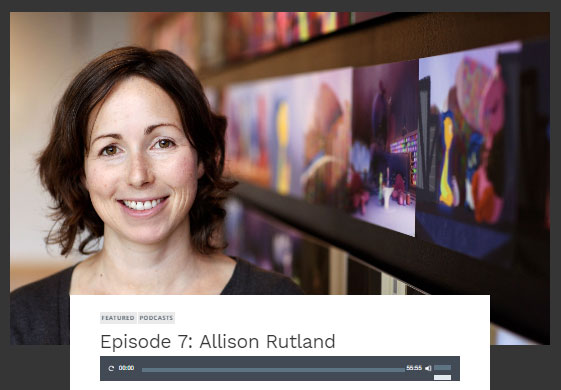
10 years ago I came across Allison Rutland’s showreel and was surprised I had never heard about her before. Remember back in those days character animation was very small in UK and studios in London mostly hired people from Animation Mentor / Gobelins and Supinfocom so it was very easy to get to know everyone especially if you were an Animation Mentor graduate. Animation Mentor even got nicknamed the “mafia” by some people at that time since we snapped all the jobs.
I was impressed when I saw her reel and especially that last emotional acting shot that immediately reminded me of the work coming out of AAU’s Pixar Class so I wasn’t surprised to hear she landed a job at Pixar.
Allison Rutland old showreel
Finally many years later and after she had a very successful career at Pixar I was very happy to hear the story about that shot and I wasn’t surprised to hear it was a shot that took her close to 2 years to finish. I also have several shot that have been on the backburner for just as long so I totally relate.
Go check it out it is a very interesting interview where she shares the struggles of her journey and she mentions “There will be blood” which also happens to be one of my all time acting favorite movie featuring Daniel Day Lewis.
Thumb up to “On Animation” for providing all the footnotes you might want to check out.